Home | Face Enhancement and Rejuvenation | Rhinoplasty – Nose Reshaping
Rhinoplasty – Nose Reshaping
 Surgery of the nose (rhinoplasty) is one of the most common cosmetic procedures performed on the face of patients of all ages, from the mid-teens and older, for both men and women. Whether you would like to alter the nose you were born with, or have had an injury to your nose that has altered its appearance, you can achieve dramatic improvement with rhinoplasty. This procedure helps refine the shape of your nose to better fit and enhance your other facial features. Every rhinoplasty procedure at Saratoga Springs Plastic Surgery, PC is custom-designed by board-certified plastic surgeon Dimitri Koumanis, MD using his advanced surgical expertise and knowledge of facial aesthetics. He is committed to helping patients achieve results that look beautifully natural and improve the overall balance of their features.
- What Is Rhinoplasty?
- Rhinoplasty Benefits
- Rhinoplasty Candidates
- Rhinoplasty Consultation
- Rhinoplasty Types
- Rhinoplasty Procedure
- Rhinoplasty Recovery
- Rhinoplasty Cost
- Non-Surgical Rhinoplasty
- Rhinoplasty Scars
- Complementary Procedures
- Additional Rhinoplasty FAQs
Rhinoplasty At a Glance
- Candidates: Adults and teens (with completed facial growth) seeking cosmetic improvements to the nose, or patients with breathing difficulties from a deviated septum. Good overall health is required.
- Potential Benefits: Improved nose shape, proportion, symmetry, and contour; a more balanced facial appearance; a feminine or masculine aesthetic; and correction of breathing issues or injury-related concerns.
- Procedure: An outpatient procedure performed under general anesthesia at our Joint Commission-accredited facility. Most surgeries are completed within 2 to 4 hours depending on complexity.
- Recovery: Most patients return to sedentary work within 7 to 10 days. A splint is worn for one week, with swelling gradually subsiding and full results visible after one year.
- Surgeon: Dr. Koumanis is a board-certified plastic surgeon with over 20 years of experience performing nose reshaping procedures. His preferred technique is a “closed” rhinoplasty, which conceals scars inside the nasal structures.
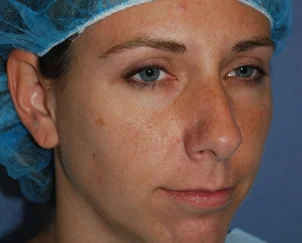
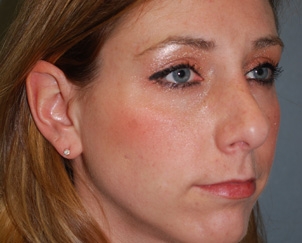
What Is Rhinoplasty?
Rhinoplasty is a surgical procedure designed to change the size or shape of your nose and enhance your overall facial harmony. Common parts of the nose that are reshaped with a rhinoplasty include the width of the nostrils, the slope of the ridge, the overall nose width, a prominent “hump,” and the angle of the nasal tip. A large nose can be made more petite and feminine to better fit a woman’s face. A man’s large “ethnic” nose with a prominent hump can be made smaller to attract less attention and to achieve balance with the rest of the face. In some cases, a rhinoplasty is used to restore the shape of the nose after an injury. The internal component of the procedure can open blocked breathing pathways to increase airflow for patients who have difficulty breathing.
What Are the Benefits of Rhinoplasty?
Dr. Koumanis can customize each rhinoplasty to address a wide range of cosmetic concerns, depending upon the individual patient’s needs. Rhinoplasty procedures are often used to accomplish one or more of the following:
- Reshape or resize the nostrils
- Reduce the size of the nasal tip
- Reduce the overall size of the nose
- Change the position of the tip of the nose
- Smooth the ridge of the nose if a prominent “hump” is present
- Straighten a crooked nose
Most patients report a boost in self-confidence after their nose reshaping procedure. The nose is so visible and such a focal point on your face, that if its new appearance satisfies you, you’ll likely achieve a boost in your self-esteem. In addition to its cosmetic benefits, a rhinoplasty can also improve your nose’s function and airflow by correcting a deviated septum or other blockages to the nasal passages.
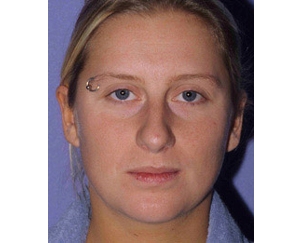
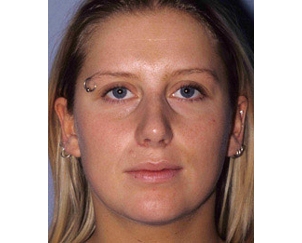
Real Patients, Real Results
24 year old who desired a more refined nose tip, a narrower nose, and to reduce a mild “hump”. Note that no scar is present across the columella (skin between the nostrils) since incisions were used within the nostrils to reshape her nose.
Who Is a Good Candidate for Rhinoplasty?
Candidates for rhinoplasty often seek to cosmetically enhance their nose for a more symmetrical and proportionate appearance. By changing the size and/or shape of the nose, Dr. Koumanis can improve the harmony with other facial features. Some candidates have nose abnormalities as a result of birth defects, injury, or disease. Other potential rhinoplasty patients may have noticed the size of their nose has increased with age and want to achieve a smaller, more youthful aesthetic appearance. If you are concerned with the appearance of your nose, the best way to discover if you are a good candidate for rhinoplasty is to schedule a consultation with Dr. Koumanis.
What Can I Expect During My Rhinoplasty Consultation?
Your rhinoplasty journey begins with a thorough, one-on-one consultation with Dr. Koumanis. This appointment is designed to give you the information and confidence you need to make an informed decision about moving forward. Dr. Koumanis will examine the external and internal structures of your nose, assess your overall facial proportions, and take time to understand your aesthetic goals and any functional concerns, such as difficulty breathing.
This is also your opportunity to ask questions. Patients are encouraged to bring photos that illustrate the changes they have in mind, as this helps guide a productive conversation about what is realistic and achievable. Dr. Koumanis will explain which surgical approach is best suited to your anatomy, walk you through what the recovery process looks like, and outline what results you can realistically expect. By the end of the consultation, you should have a clear, customized treatment plan and a full cost estimate for your procedure.
What Are the Different Types of Rhinoplasty?
Ethnic Rhinoplasty
Ethnic rhinoplasty is a specialized approach that refines the nose while honoring the unique features that reflect a patient’s cultural background and heritage. Nasal anatomy varies significantly across ethnicities, with differences in skin thickness, cartilage structure, nasal bridge height, and tip definition all playing a role in how the procedure is planned and performed.
Dr. Koumanis brings both surgical precision and a genuine sensitivity to these nuances, crafting results that improve facial harmony without erasing the characteristics that make each patient’s appearance distinctly their own. The goal is always a natural outcome that the patient recognizes as an enhanced version of themselves.
Teenage Rhinoplasty
Rhinoplasty for teenagers requires careful patient selection and a conservative surgical philosophy. Before proceeding, Dr. Koumanis confirms that the patient’s facial growth is sufficiently complete, which typically occurs around age 15 to 16 for girls and somewhat later for boys. Common concerns addressed in teenage patients include a prominent dorsal hump, nasal asymmetry, and breathing difficulties.
Because adolescence is a formative time both physically and emotionally, Dr. Koumanis takes a thoughtful approach that prioritizes age-appropriate results, clear communication with both the patient and their family, and outcomes that will continue to suit the patient’s features as they mature.
Male Rhinoplasty
Men seeking rhinoplasty have distinct aesthetic priorities that differ meaningfully from those of female patients. A masculine nose typically calls for a straighter bridge, stronger projection, and an overall structure that reads as defined rather than delicate.
Whether addressing a dorsal hump, post-injury asymmetry, or proportions that feel out of balance with the rest of the face, Dr. Koumanis approaches male rhinoplasty with an understanding of these differences. His technique focuses on achieving a result that looks natural and refined without softening the features in ways that would feel inconsistent with the patient’s overall appearance.
How Is the Rhinoplasty Procedure Performed?
 Rhinoplasty is usually done as an outpatient procedure in our Joint Commission-accredited surgical facility, ensuring your safety, comfort, and privacy. You will be sedated using either local or general anesthesia. Depending upon your customized treatment plan, Dr. Koumanis will use one of two main approaches: standard (closed) or open rhinoplasty. Dr. Koumanis was trained and is an expert in doing the standard “closed” rhinoplasty approach which leaves no external scars. The surgery can typically be completed in 1-3 hours.
- Standard (“Closed”) Rhinoplasty: Incisions are made inside the nostrils. The nasal bones, cartilage, and soft tissues are reshaped to improve the external contour. There are no visible scars. This is the most common type of rhinoplasty done by Dr. Koumanis.
- Open Rhinoplasty: Frequently used by many surgeons for all their nose reshaping patients and by Dr. Koumanis for difficult or more involved nose reshaping. One external incision is made across the columella (skin and cartilage strut which is located between the nostrils). Bones, cartilage, and soft tissues are reshaped under direct vision. A visible scar will be present between the nostrils.
For cases in which only the nasal tip is enhanced (tip-plasty), Dr. Koumanis may select either a standard/closed or open approach. If the patient wishes to reduce the size of the nostrils, two additional tiny incisions may be made at the outer base of the nostrils hidden within the creases.
For patients with obstructed airflow, the correction of a deviated septum (septoplasty) or turbinate (internal air baffle) reduction is often performed at the same time as any cosmetic enhancements to the nose to improve nasal breathing.
What Is Rhinoplasty Recovery Like?
Immediately following your rhinoplasty, an external plaster cast or splint is placed on your nose for protection and support of the nose bones and underlying structures. Soft splints or nasal packs are also typically placed inside the nose for up to five days. The cast or splint is usually removed within one week. If Dr. Koumanis has used any external sutures, they will also be removed by a week; internal sutures will dissolve. Swelling and bruising are normal during the initial stage of recovery but should gradually subside over three weeks and the 90% result should be present by six weeks. Discomfort can be easily controlled with oral medication.
Most patients return to work or their normal daily activities within one to two weeks. At this time, you should be able to see significant improvements to the shape of the nose, and you should notice the results of your rhinoplasty continue to improve in the following months. The final result is typically seen after one year.
How Much Does Rhinoplasty Cost?
There is no one set cost for rhinoplasty. A number of factors can affect the price of your rhinoplasty, including the technique used in your custom surgical plan, the overall complexity of the operation, how long Dr. Koumanis estimates the procedure will take to perform, the experience of your plastic surgeon, and the geographic location of the practice, and whether the procedure is done in the office operating room or hospital setting. It is always better to have your rhinoplasty done right the first time than to choose your surgeon based on cost alone.
At the end of your initial consultation, Dr. Koumanis will provide you with a quote for the cost of your procedure as well as any associated fees. Patients who are having a rhinoplasty performed to improve airflow may have a portion of the cost covered by their health insurance providers. However, nose reshaping is most often considered “cosmetic” and, therefore, not covered by health insurance. All rhinoplasty patients may also take advantage of our plastic surgery financing options, which can offer low monthly payment plans with little to no interest.
Can I Get Rhinoplasty Without Surgery?
While rhinoplasty is typically performed with a surgical procedure, there are non-surgical treatments available for those who qualify. Dermal fillers like JUVÉDERM® and RADIESSE® can be used to reshape the structure of your nose, smooth out unwanted bumps, and address a prominent nasal bridge. The process, known as a non-surgical or liquid rhinoplasty, involves injections made into the predetermined areas, with sessions usually lasting between 15 and 45 minutes.
What Will My Rhinoplasty Scars Look Like?
Generally, both closed and open rhinoplasty techniques do not leave noticeable scarring or any visible scarring at all. If the patient has a closed rhinoplasty, the most common approach utilized by Dr. Koumanis, the incisions are made inside of the nose and should remain concealed after surgery, so they are not visible. Alternatively, if the procedure needs to be performed as an open rhinoplasty, the small incisions will be located on the underside of the nose between the nostrils.
Upon healing, the residual scarring typically blends in with the natural crease of the nasal columella and will be virtually unnoticeable. Following Dr. Koumanis’s post-operative instructions for proper wound care and healing is equally as important for a safe recovery as it is for minimizing the appearance of scarring.
Complementary Facial Procedures
Depending upon your personal cosmetic goals, there are additional procedures that may enhance the results of your rhinoplasty. For example, chin and cheek augmentation as well as facelift surgery and brow lift surgery to rejuvenate their appearance. During the consultation process, Dr. Koumanis will perform a physical exam of the area(s) that bother you, examine your nose both externally and internally, thoroughly discuss your aesthetic concerns, and help you decide which procedure or combination of procedures can best meet your expectations.
Additional Frequently Asked Questions
How Long Does Rhinoplasty Take?
Depending on the extent of the surgery, most rhinoplasty procedures are typically completed within two to four hours. However, each surgery varies based on the patient’s unique treatment and surgical complexities. Dr. Koumanis should be able to give a more approximate timeframe after a thorough exam and evaluation during your initial consultation.
When Will Swelling Go Away After Rhinoplasty?
The majority of swelling will be most prominent during the first six weeks to several months after rhinoplasty. Although swelling should gradually fade as the nose heals, it may take six months to one year for all inflammation to fully resolve. Patients can help minimize swelling by closely following aftercare instructions, such as keeping the head elevated during rest, limiting sodium, and eating healthy, antioxidant-rich foods such as fruits and vegetables.
Can Rhinoplasty Change Your Face?
One of the benefits of rhinoplasty surgery can be achieving an overall more harmonious facial balance by altering the nose’s shape, size, tip, or projection. While no structural changes are made to other facial areas during a rhinoplasty, changes to the nose may bring more attention to the eyes, cheeks, or mouth/smile and may cause a different perception of the surrounding features. Dr. Koumanis’s expertise in understanding intricate nasal structures allows him to make the best surgical decisions to ensure optimal aesthetic changes that still complement the patient’s natural anatomy for an ideal outcome.
What Are the Risks of Rhinoplasty?
As with any surgical procedure, there are certain risks that can occur, such as bleeding, infection, poor wound healing, and a negative reaction to anesthesia. More specific to rhinoplasty and the complexities of the procedure, there may be complications with irregular nasal contours, changes in skin sensation or numbness, perforation of the nasal septum, and nasal breathing problems. Although these circumstances are rare, it is important to choose a qualified and experienced plastic surgeon that knows how to mitigate risks and address any complications that may arise.